

🇨🇦 A Compromised Prime Minister
Carney’s Brookfield exposure remains. The Liberal government accommodates it.

Six times, senior Canadian officials determined that Mark Carney should be screened from government business because of his private financial interests. In four of those cases, the matters were still pending, which meant the Prime Minister could not even be told what they were.
Strip away the bureaucratic vocabulary and the arrangement is extraordinary. Files headed toward the elected head of government are examined to determine whether his financial position makes him too conflicted to see them. If the screen applies, the matter proceeds without him. The Clerk of the Privy Council told Parliament that 13 situations had been assessed this way; six triggered the screen.
Canada calls this an ethics safeguard.
It is also an admission.
Mark Carney entered the highest political office in the country with financial interests sufficiently connected to his former corporate life that parts of his own government must sometimes be kept from him. Canada did not require him to eliminate that condition. It built machinery to accommodate it.
The reason is not mysterious. Brookfield’s own chief operating officer, Justin Beber, confirmed before Parliament that increases in Brookfield’s share price increase the value of instruments such as stock options and deferred share units. Whoever holds those instruments benefits. Carney retained Brookfield-linked financial instruments after leaving the company, along with other deferred interests arising from his time there.
A blind trust changes who manages those assets. It does not change who owns the economic interest.
If Brookfield rises and a Brookfield-linked instrument rises with it, the financial connection remains. That is why Carney required a second barrier: an ethics screen to identify government matters capable of colliding with interests the trust had not removed.
The screen is not proof that the conflict disappeared. It is evidence that it survived the first safeguard.
There was a cleaner alternative. Under questioning, Beber confirmed that instruments of the kind at issue could, depending on their terms, be bought back, settled for cash or otherwise unwound. The Ethics Committee later concluded that Carney could have arranged to be compensated for Brookfield holdings rather than retaining the potential for future financial benefit.
Carney entered office under a structure that preserved financial exposure while government accepted responsibility for containing the consequences.
The standard defence is that this is simply adult governance. Sophisticated people arrive with sophisticated assets. Forced sales create tax events, contractual friction and possible losses. Disclosure provides transparency. A blind trust prevents direct management. A screen removes the office-holder from specific files. With enough compliance machinery, the conflict can be made manageable.
The defence sounds pragmatic only because it quietly rewrites the purpose of ethics rules. It treats preservation of the office-holder’s private financial position as a legitimate design constraint that the state is obliged to engineer around.
That premise is illegitimate.
The Prime Minister’s Office is not a professional opportunity to which a candidate is entitled while negotiating how much residual equity he gets to preserve. It is concentrated public power, voluntarily sought. When that power collides with private financial interests, the interests yield.
Carney’s arrangement reversed the sequence. The private complexity remained fixed. Public institutions were conscripted to manage it.
That is not pragmatism. It is the subordination of the office to the portfolio.
Brookfield’s scale makes the weakness impossible to confuse with ordinary stock ownership.
Carney’s final screen identifies 103 companies. Parliamentary evidence put Brookfield’s network near 2,000 businesses. The gap is not a clerical failure. It is a category error.
A company-by-company ethics screen is being asked to contain a global asset platform whose value is shaped by precisely the domains a prime minister governs: infrastructure, energy, tax treatment, regulation, subsidies and the movement of capital itself. Brookfield does not require a federal cheque bearing its name for Ottawa to affect its fortunes. The large levers of economic government move asset values whether or not any individual file is labelled “Brookfield.”
Canada’s conflict law generally excludes decisions of “general application” from the definition of private interest. Applied to residual exposure spread across a global asset platform, that exclusion becomes a structural opening. The broadest policy decisions—the ones most capable of moving the value of those holdings—are precisely the decisions the statute is designed to leave untouched.
The tool keeps functioning. The reality has rendered it inadequate.
Parliament’s Ethics Committee eventually reached the same structural conclusion. It recommended stricter treatment of broad policy decisions where senior office-holders possess unusually extensive financial interests. More importantly, it recommended that future prime ministers sell their controlled assets and that a blind trust should no longer count as true divestment for the holder of that office.
That is not merely a proposal for somebody else someday. Parliament examined the architecture and concluded that the next prime minister should face the cleaner rule Carney did not: sell.
Yet the current system continues to operate exactly as designed. Officials determine whether matters may reach Carney. When his screen applies, the Prime Minister is excluded and, in pending cases, kept unaware of the matter.
This is offered as proof that the system works.
That misses what the system is working to accomplish.
A screen can function flawlessly and still embody the wrong bargain. Perfect compliance would simply mean that public servants are successfully protecting government decisions from conflicts the Prime Minister was permitted to carry into office.
The safeguards reveal who Canada chose to inconvenience. Carney retains the financial complexity; the public service absorbs the compliance burden.
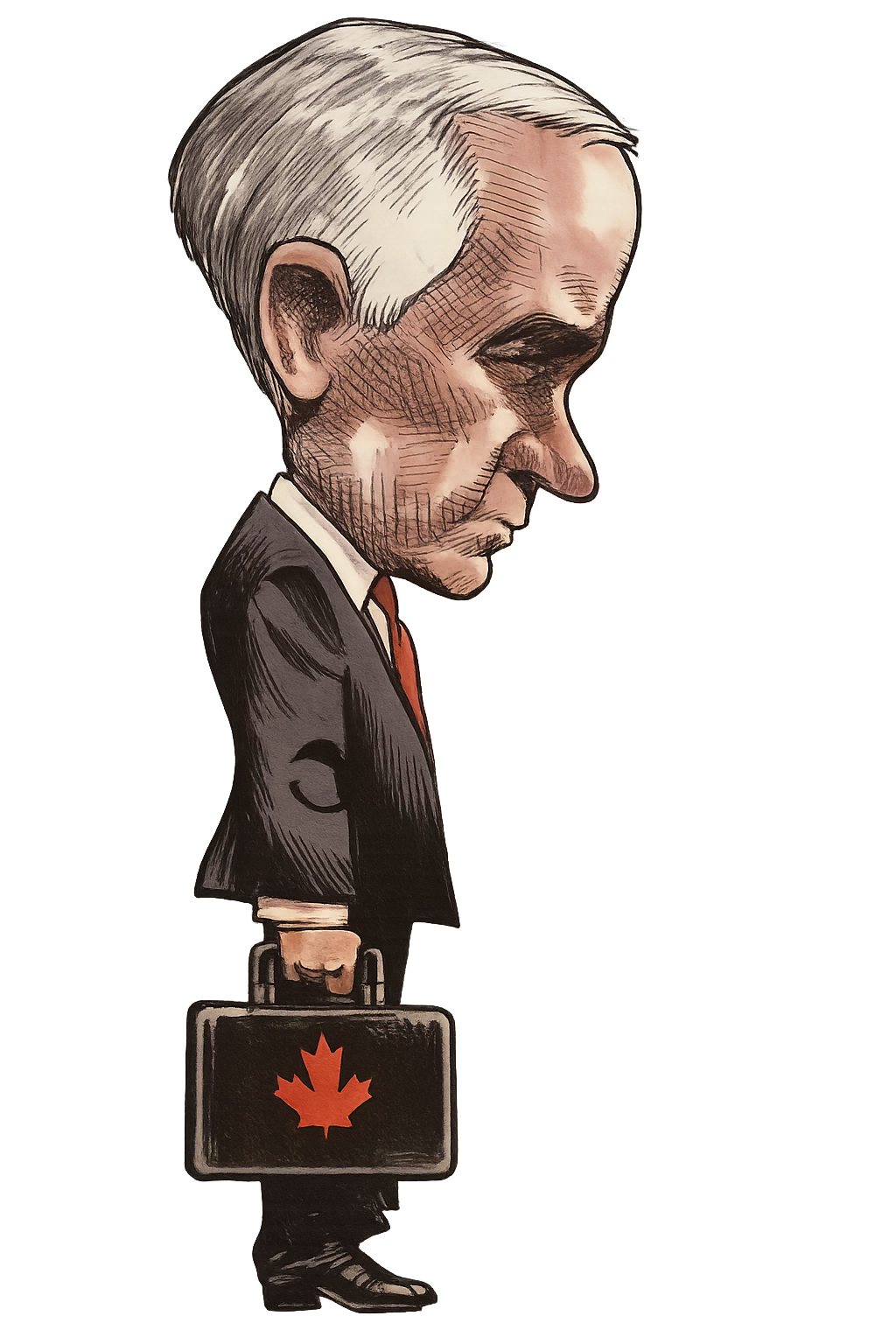
And this is where Carney’s celebrated financial expertise stops helping his defence and starts sharpening the indictment.
His claim to exceptional competence rests on superior understanding of capital. He ran central banks and chaired a major global investment firm. He understands how government policy changes incentives, redirects investment and reprices assets.
That knowledge cannot be invoked only when it flatters the résumé.
The same intelligence that understands how public policy changes private value is the intelligence that chose to enter office retaining financial exposure connected to one of the largest investment organizations operating across the sectors his government influences.
He knew what Brookfield was. He knew what financial interests he retained. He knew what powers came with becoming Prime Minister.
He accepted a structure that left the exposure in place and transferred the compliance burden to the public service.
The expertise does not soften the arrangement. It sharpens the indictment.
Which is why “Mark Carney followed the rules” is not an exoneration. Grant the defence entirely. Assume the trust complies with the Act, the Ethics Commissioner acts conscientiously and every screen functions exactly as designed.
What did perfect compliance produce?
A Prime Minister retaining Brookfield-linked financial exposure. A second apparatus required because the first did not eliminate the conflict. Senior officials deciding which matters may safely reach the head of government. And a parliamentary committee later concluding that future prime ministers should be required to do what Carney was not: actually divest.
The architecture can work perfectly and still indict what it was designed to permit.
The language itself performs political work. “Blind trust” sounds like separation. “Ethics screen” sounds like protection. Layer enough procedure over the arrangement and the public is invited to see safeguards where the more basic fact remains: the economic interest stayed while government reorganized itself around the resulting conflict.
The compliance vocabulary converts a plain question—why was the conflict not eliminated?—into supposed proof that the existence of elaborate safeguards means nothing is wrong.
Most systems would simply require the expert to sell.
Canada, more refined, offered to manage the appearance instead.
That is the deeper inversion. The Prime Minister’s Office is supposed to impose its obligations on the person privileged to occupy it. Its demands should outrank his portfolio, his contracts and his financial convenience. With Carney, Canada accepted the reverse. His financial exposure became the fixed condition. The machinery of government became the thing that could move around it.
Files could move. Officials could screen. Decisions could proceed without him. The Prime Minister could be kept ignorant of his own government’s business.
The one thing the system did not require to move far enough was the conflict itself.
That is the indictment hiding behind the reassuring language of blind trusts and ethics screens. Canada took a private financial conflict belonging to Mark Carney and converted its consequences into a public responsibility.
The Prime Minister’s Office should have imposed its terms on Mark Carney.
Instead, Canada bent the office around him.
His financial interests remained private.
Managing their consequences became public.
— The Control Group
If this clarified something you had felt but not yet named, please share it. If you’re interested in power, narrative, and institutional reality as they are—not as they are packaged—please subscribe.
This publication remains free—no advertising, institutional sponsors, grant funding, or partisan patronage. Reader support is its only revenue source. That structure is intentional.
If independent analysis should remain structurally independent, you can support The Control Group here. No tiers. No access arbitrage. Just our appreciation.
Love our Moose on the Loose for disclosing so much of his Brookfield promoting self interests and while the 'green new deal' is failing everywhere but Canada, people shifting towards pollution the real culprit instead of carbon - which is primarily scapegoated towards the carbon credit materialization and monetization schemes... just have a look at www.carboncredits.com for an overview.
Carney’s Italy Trip… Something Doesn’t Add Up + BC NDP to Give 24 Million Acres to First Nations
https://youtu.be/g4h7-32Vkhc?si=TnXyfCOSFSJpvxzy
https://infinium.energy/
I shaketh my head that Liberals are ahead in these so called political polls.
CrimeConCarney is a corrupt lying bastard who is bankrupting Canada to install the WEF and Communism. He belongs in jail for Treason and Crimes Against the Canadian People